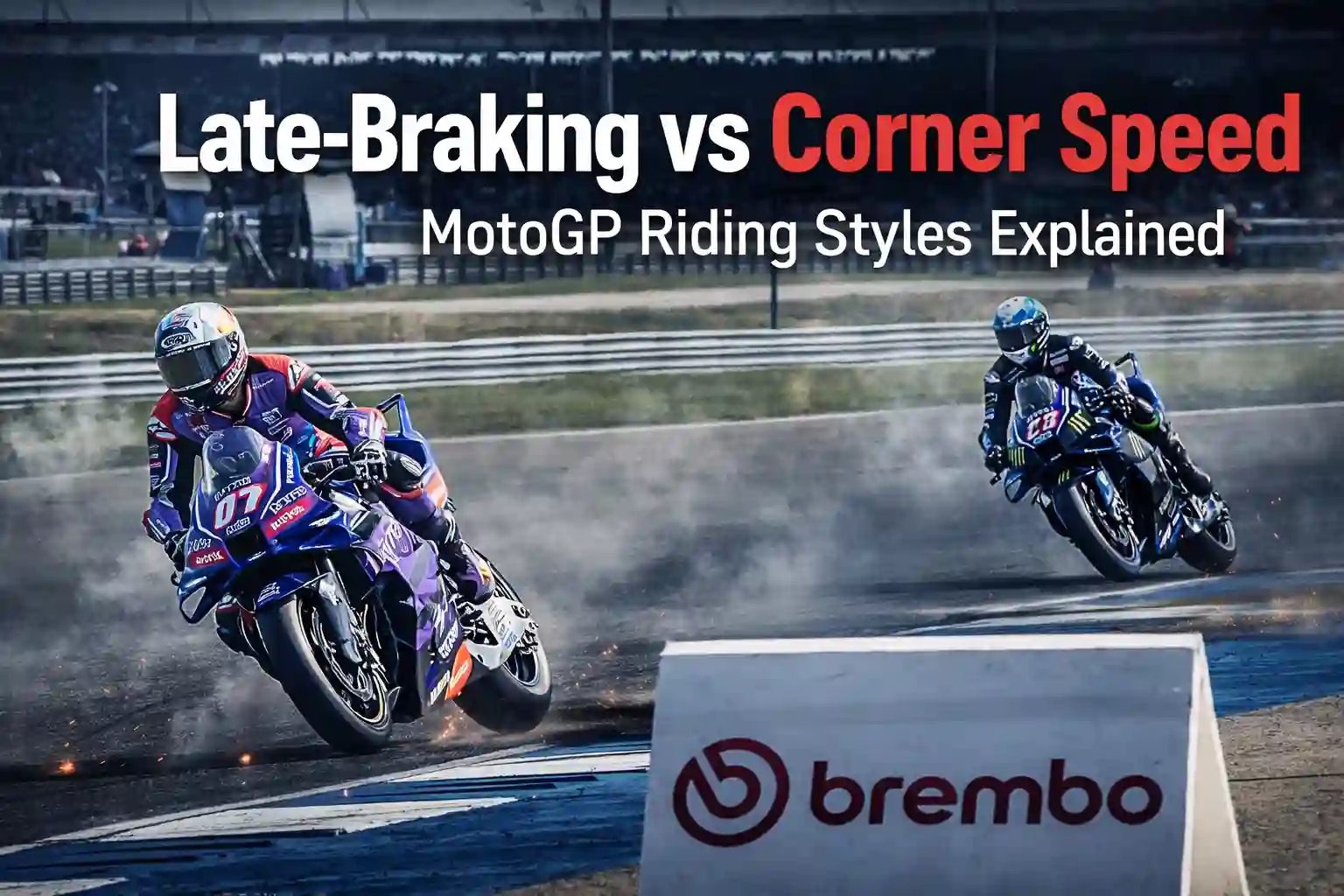
MotoGP riding styles explained is a topic that fascinates racing fans because it reveals how different riders extract maximum performance from their machines. In MotoGP, riders must manage braking, corner entry, throttle control, and tyre grip at extreme speeds. The way a rider combines these elements forms their unique riding style.
Two of the most discussed techniques in modern MotoGP are late braking and corner speed riding. Each style influences overtaking strategy, tyre management, and even the type of motorcycle that suits a rider best. Understanding these approaches helps fans appreciate why certain riders dominate specific circuits and why different manufacturers design bikes with distinct characteristics.
This guide explores the key differences between these techniques, explains how riders apply them on track, and highlights famous competitors known for each style.
Understanding Riding Styles in MotoGP
Riding style in motorcycle racing refers to the combination of braking technique, corner entry approach, mid-corner control, and acceleration strategy a rider uses during a lap.
Unlike car racing, where steering and braking systems are separate from body balance, motorcycle riders use their body position and weight transfer to control the bike’s stability.
At speeds exceeding 350 km/h (217 mph), riders must make precise decisions about when to brake, how quickly to lean, and when to apply throttle again.
Over time, riders naturally develop habits that shape their preferred technique. Some rely on aggressive braking and sharp corner entry, while others prioritize smooth lines and maintaining momentum through turns.
These differences lead to the two primary approaches often discussed in the sport.
Embed from Getty Images
The Late-Braking Riding Style
Late braking is one of the most visually dramatic techniques in motorcycle racing. Riders using this method brake later and more aggressively than competitors when approaching a corner.
Instead of slowing down early, they maintain speed longer down the straight and apply heavy braking just before turning into the corner.
Key Characteristics
- Extremely late braking points
- Aggressive corner entry
- Quick direction change into the apex
- Frequent overtaking in braking zones
Because braking occurs so late, the front tyre experiences immense load and heat. Riders must carefully manage pressure on the brake lever to avoid losing grip.
Advantages
This technique offers several competitive benefits:
- Strong overtaking potential during braking zones
- Ability to defend position by braking deeper into corners
- Effective use of bikes with powerful braking stability
Some of the most spectacular passes in MotoGP history have come from riders mastering this technique.
Riders Known for Late Braking
Several world champions became famous for their ability to brake deeper into corners than their rivals.
Examples include:
- Marc Márquez – Known for extreme front-end control and aggressive braking.
- Valentino Rossi – Built many iconic overtakes using late-braking maneuvers.
These riders often surprise competitors by entering corners faster while still maintaining control.
The Corner Speed Riding Style
The second major technique focuses on maintaining maximum speed through the middle of the corner rather than relying on aggressive braking.
Instead of braking extremely late, riders slow down earlier but carry more momentum through the turn.
Key Characteristics
- Smooth corner entry
- High mid-corner speed
- Flowing racing lines
- Earlier throttle application on exit
This approach prioritizes stability and consistency rather than sudden aggressive maneuvers.
Advantages
Corner speed riding provides several benefits:
- Improved tyre preservation due to smoother inputs
- More consistent lap times
- Greater efficiency on flowing circuits with long corners
Maintaining momentum allows riders to build strong rhythm throughout a race.
Riders Known for Corner Speed
Some riders are famous for smooth and precise riding styles that maximize corner momentum.
Examples include:
- Jorge Lorenzo – Renowned for perfectly smooth lines and precision.
- Fabio Quartararo – Known for maintaining exceptional mid-corner speed.
These riders often look incredibly stable through corners while maintaining impressive lap pace.
Embed from Getty Images
Late Braking vs Corner Speed MotoGP: Key Differences
Understanding the comparison between late braking vs corner speed MotoGP techniques highlights how different riders approach the same corner.
| Factor | Late Braking Style | Corner Speed Style |
|---|---|---|
| Braking point | Very late | Earlier and smoother |
| Corner entry | Aggressive | Controlled |
| Mid-corner speed | Slightly lower | Higher |
| Overtaking potential | Very strong | More limited |
| Tyre wear | Higher front tyre stress | More balanced |
Both techniques can produce winning lap times, but the effectiveness depends heavily on track layout and bike characteristics.
How Motorcycle Design Influences Riding Style
A rider’s style is often shaped by the strengths and weaknesses of their motorcycle.
Different manufacturers build bikes with varying characteristics, including braking stability, acceleration power, and cornering balance.
For example:
- Ducati Lenovo Team motorcycles are known for powerful acceleration and strong braking performance.
- Monster Energy Yamaha MotoGP machines traditionally emphasize smooth cornering and stability.
Because of these differences, riders sometimes adapt their technique when switching teams.
A rider comfortable with corner speed may need to brake more aggressively if their bike performs better in straight-line acceleration and braking zones.
How Track Layout Affects Riding Style
Not every circuit rewards the same approach.
Tracks with tight hairpins and heavy braking zones often favor late-braking riders who can overtake into corners.
Meanwhile, circuits with long sweeping turns and flowing sections reward riders who maintain high corner speed.
For example:
- Technical tracks with frequent braking encourage aggressive overtakes.
- Fast circuits with flowing layouts emphasize smooth riding and momentum.
The most successful competitors are able to adjust their approach depending on the circuit.
Embed from Getty Images
Why the Best Riders Combine Both Techniques
Although riders may be known for a particular style, the fastest competitors in modern MotoGP often blend elements of both approaches.
They may:
- Use late braking when attempting overtakes
- Maintain high corner speed when chasing lap time
- Adjust braking pressure depending on tyre wear
This adaptability is crucial in modern racing, where the margin between victory and defeat can be less than a tenth of a second per lap.
Mastering multiple techniques allows riders to respond to changing conditions during a race.
How Riding Styles Affect Race Strategy
Riding style does not only influence lap time—it also shapes overall race strategy.
For example:
- Riders using late braking may rely on overtaking opportunities into corners.
- Riders focused on corner speed may aim to build rhythm and maintain consistent pace.
Tyre management also plays a major role. Aggressive braking places more stress on the front tyre, while smoother riding distributes load more evenly across both tyres.
Teams analyze telemetry data to understand how each rider’s inputs affect tyre performance over race distance.
Conclusion
MotoGP riding styles explained reveals how much skill and strategy go into every lap of elite motorcycle racing. The comparison between late braking and corner speed techniques highlights two fundamentally different ways riders approach corners and overtaking.
While some riders rely on aggressive braking to gain positions, others focus on maintaining smooth momentum through turns. Both strategies can lead to success when executed correctly.
Ultimately, the most successful competitors combine elements of both approaches, adapting their technique to the demands of each circuit and the characteristics of their motorcycle.
Understanding these differences allows fans to appreciate the incredible precision and talent required to compete at the highest level of motorcycle racing.
What are the main riding styles in MotoGP?
The most common techniques discussed in MotoGP riding styles explained are late braking and corner speed riding. Late braking focuses on aggressive braking into corners for overtaking opportunities, while corner speed emphasizes maintaining momentum and smooth lines through turns.
What is late braking in MotoGP?
Late braking is a technique where riders delay braking until the last possible moment before entering a corner. This allows them to carry higher speed on straights and attempt overtakes in braking zones. Riders such as Marc Márquez are well known for mastering this aggressive approach.
What is corner speed riding style in MotoGP?
Corner speed riding focuses on maintaining the highest possible speed through the middle of a corner. Riders using this technique brake earlier but carry more momentum through the turn. This style is often associated with smooth and precise riders like Jorge Lorenzo
Which riding style is faster in MotoGP?
There is no single fastest style. The effectiveness depends on the track layout, tyre conditions, and motorcycle characteristics. Many top competitors combine elements of both late braking and corner speed techniques during a race.
Why do MotoGP riders have different riding styles?
Riding style differences are influenced by several factors including rider experience, personal technique, and motorcycle design. Different bikes in MotoGP may favor aggressive braking or smooth cornering performance.
Do MotoGP riders change their riding style?
Yes. Riders often adapt their technique when switching teams or motorcycles. For example, moving to a bike with stronger braking performance may encourage a rider to use a more aggressive corner entry style.
Why is understanding MotoGP riding styles important for fans?
Learning about different techniques helps fans understand overtaking strategies, tyre management, and why some riders perform better at certain circuits. It also highlights the skill required to control a MotoGP bike at extreme speeds.
