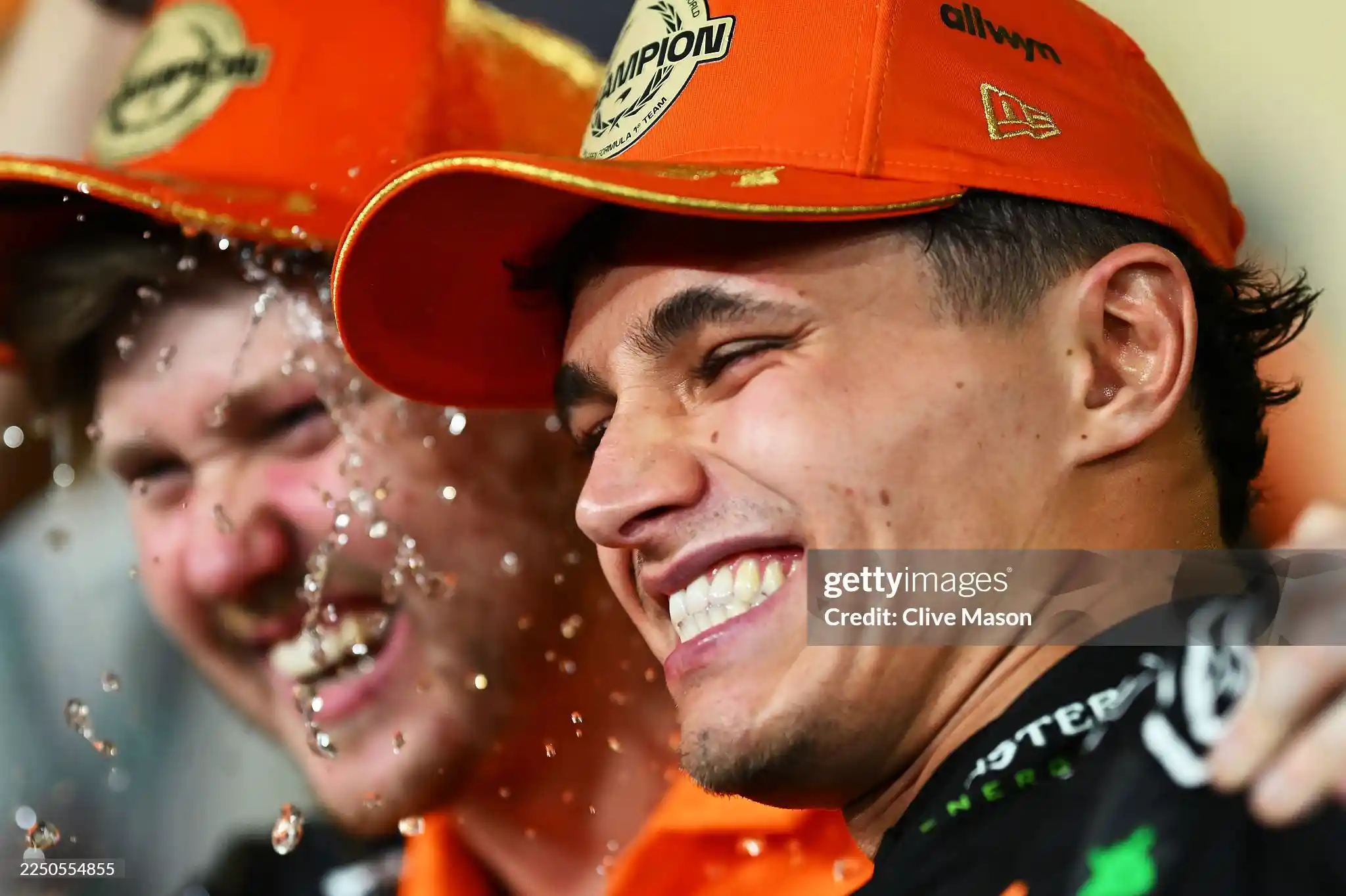
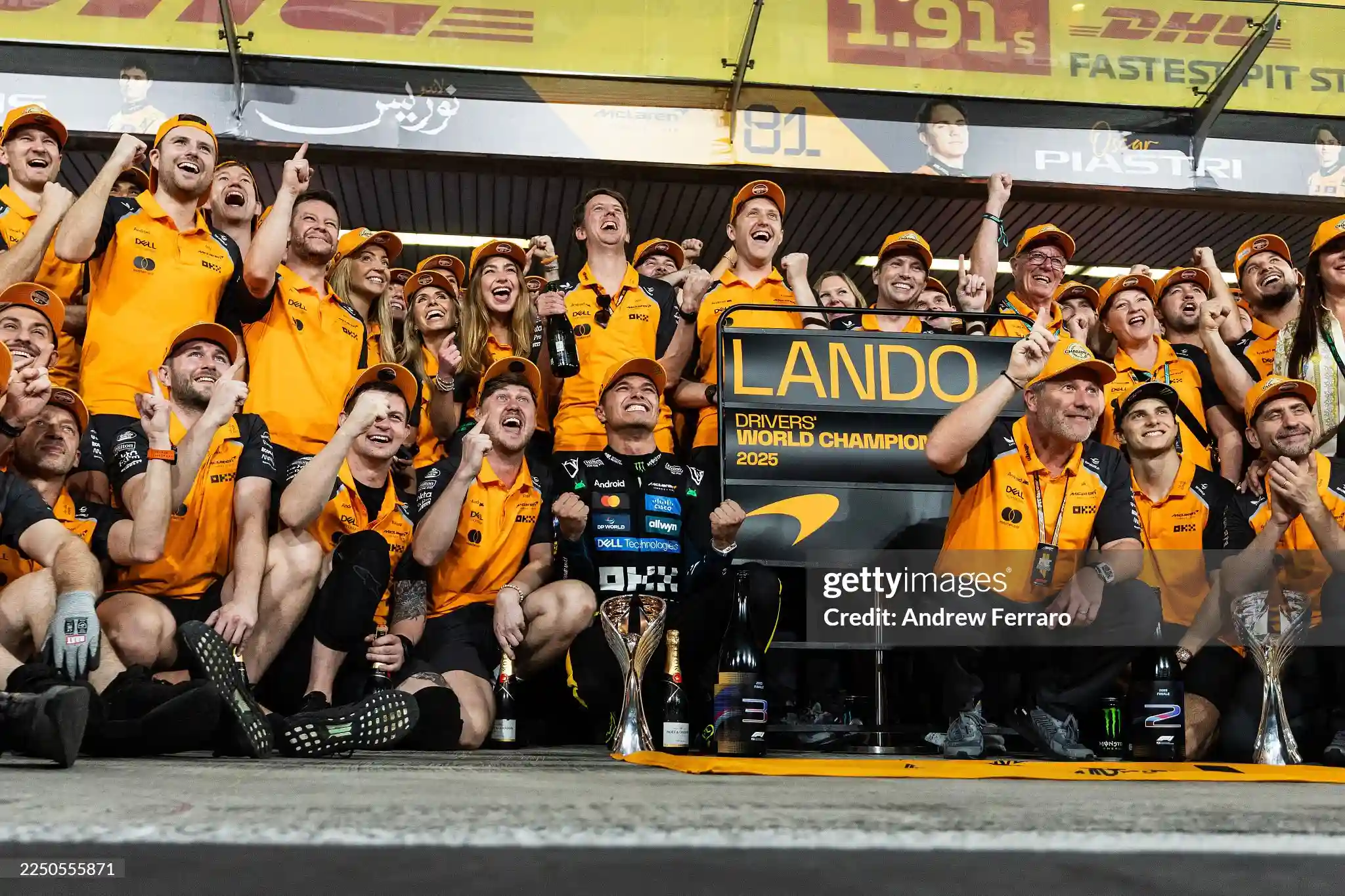
F1 World Champion — a designation that represents the pinnacle of motorsport achievement. On December 8, 2025, Lando Norris earned this coveted title at the Yas Marina Circuit, concluding one of the most dramatic championship battles in recent Formula 1 history. This comprehensive analysis examines how the British driver secured his maiden championship, the strategic decisions that defined his season, and the broader implications for the sport’s future.
The Championship-Deciding Race: Abu Dhabi Grand Prix Analysis
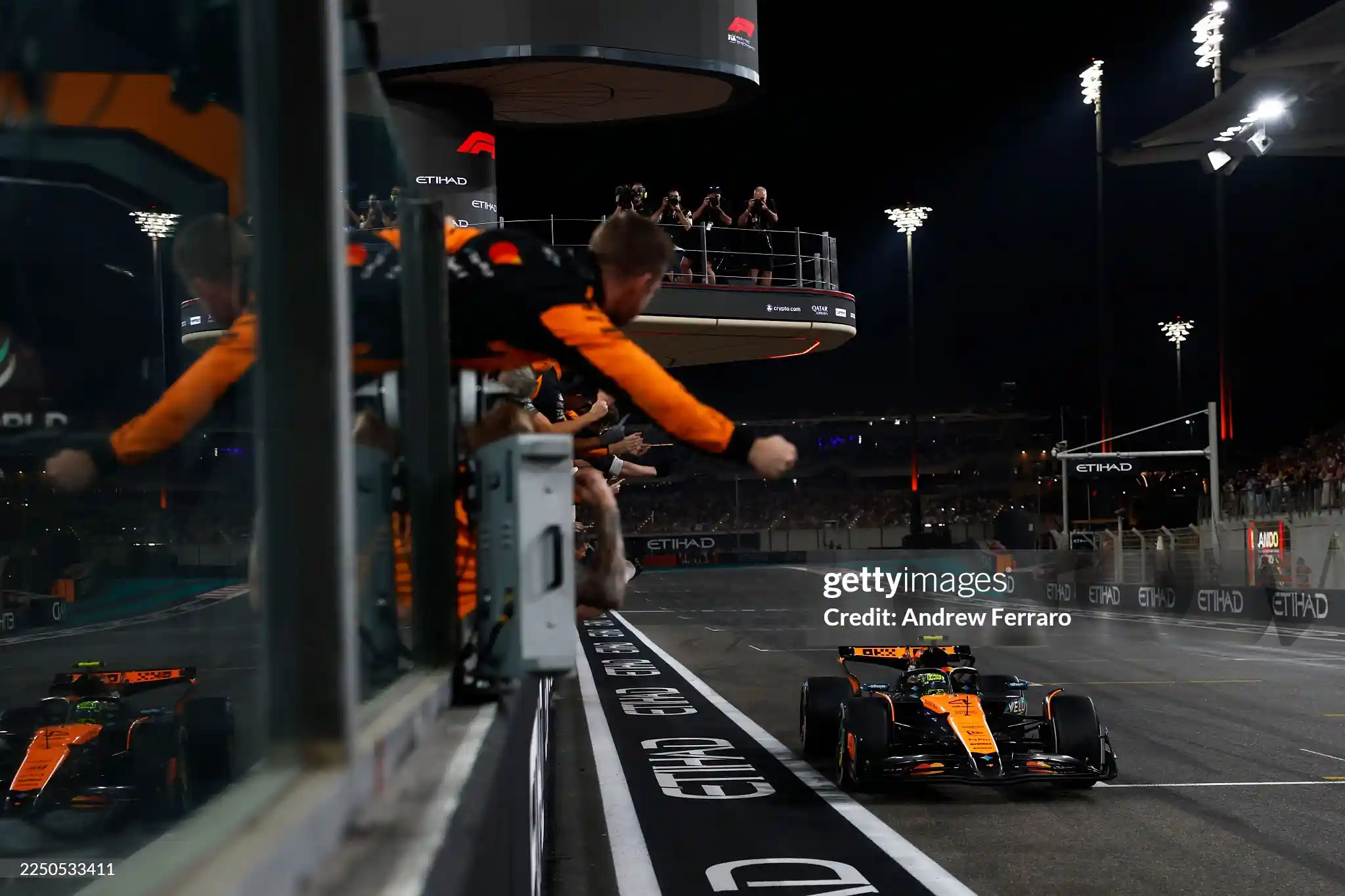
The 2025 season finale presented Norris with a straightforward mathematical equation: finish third or higher to secure the drivers’ championship regardless of other results. Starting from second position on the grid, positioned between pole-sitter Max Verstappen and teammate Oscar Piastri, the McLaren driver faced immediate pressure from the opening lap.
Race Strategy and Execution
Piastri’s first-lap overtake dropped Norris to third position — precisely the finishing position required for championship glory. Rather than engaging in unnecessary risk-taking, the 26-year-old British driver adopted a calculated approach, prioritizing championship points over race victory.
The strategic brilliance became evident through:
- Tire management protocols that ensured consistent lap times throughout all stint phases
- Defensive positioning during crucial overtaking zones, particularly after pit stop sequences
- Traffic navigation through midfield competitors without compromising position
- Pressure management when facing aggressive challenges from title rivals
Historical Significance: Breaking Records and Ending Droughts
Championship Margin Analysis
Norris concluded the season with 423 points, a mere two-point advantage over Verstappen’s 421 — marking this as one of the closest championship battles under the current points scoring system. This razor-thin margin underscores the season-long consistency required at motorsport’s highest level.
McLaren’s Return to Glory
The Woking-based team last celebrated a drivers’ championship in 2008 with Lewis Hamilton. This 17-year drought made Norris’s achievement particularly meaningful for McLaren Racing, re-establishing the organization among Formula 1‘s elite constructor teams.
British Racing Heritage
Norris becomes the 11th British driver to claim motorsport’s most prestigious individual honor, joining an illustrious lineage that includes Jim Clark, Jackie Stewart, Nigel Mansell, Damon Hill, Lewis Hamilton, and Jenson Button.
What Defined Success: Critical Factors Behind the Championship Victory
Consistency Over Flashiness
Championship mathematics reveal an essential truth: race victories attract headlines, but podium consistency secures titles. Norris demonstrated exceptional reliability throughout 2025, accumulating points through strategic racing intelligence rather than solely pursuing race wins.
Mental Fortitude Under Pressure
The psychological demands of a championship battle test drivers beyond pure speed. Norris exhibited remarkable composure during:
- High-pressure qualifying sessions determining grid positions
- Wheel-to-wheel combat with multiple championship contenders
- Strategic decision-making during unpredictable race circumstances
- Media scrutiny and public expectation management
Technical Partnership with McLaren
The symbiotic relationship between driver and team proved crucial. McLaren’s technical developments throughout the season provided competitive machinery, while Norris’s feedback and setup preferences maximized performance extraction from the MCL39 chassis.
Impact Assessment: Implications for Formula 1’s Future
Competitive Balance Restoration
Verstappen’s four-year championship dominance concluded with this title change, injecting renewed unpredictability into Formula 1. Multiple teams and drivers now recognize realistic pathways to championship contention, potentially increasing on-track competition quality.
Commercial and Sponsorship Opportunities
Championship success typically generates significant commercial benefits. McLaren can anticipate:
- Enhanced sponsor attraction and partnership value increases
- Elevated merchandise sales and fan engagement metrics
- Improved negotiating positions for technical partnerships
- Greater media coverage generating organic marketing value
Inspiration for Emerging Talent
Junior formula drivers worldwide now possess a contemporary example of perseverance yielding ultimate success. Norris’s progression from karting through junior categories to championship glory provides a motivational blueprint for aspiring professionals.
Strategic Lessons: What This Championship Teaches
The Value of Calculated Risk Management
Abu Dhabi exemplified championship-winning mentality: recognizing when aggressive racing becomes unnecessary risk. This maturity distinguishes title contenders from race winners — understanding that championships reward season-long intelligence over individual race heroics.
Team Cohesion as Competitive Advantage
McLaren’s unified approach, from pit crew efficiency to strategic decision-making, contributed substantially to championship success. Organizations seeking sustained competitiveness must cultivate similar collaborative environments where every team member understands their championship contribution.
Adaptation to Regulatory Changes
The 2025 technical regulations required teams to optimize performance within new parameters. McLaren’s successful adaptation, combined with Norris’s driving style flexibility, demonstrates the importance of continuous development throughout evolving regulatory landscapes.
Expert Perspective: Why This Victory Matters
As someone who has followed Formula 1 for over a decade and analyzed championship battles across multiple eras, this particular title fight stands out for several reasons:
The two-point margin represents one of the sport’s closest finishes, but more significantly, it demonstrates that modern Formula 1 rewards comprehensive excellence rather than isolated brilliance. Every qualifying lap, every race start, every strategic decision accumulated toward this championship outcome.
Norris’s victory also signals a potential generational shift. While established champions like Verstappen remain formidable competitors, new champions emerging creates narrative diversity that benefits the sport’s global appeal and competitive integrity.
Looking Forward: The 2026 Season and Beyond
Championship defense presents unique challenges. Norris and McLaren now face:
- Increased competitive scrutiny as rivals analyze their successful formula
- Technical regulation changes for 2026 requiring adaptation to new power unit specifications
- Psychological pressure associated with defending rather than pursuing championship glory
- Driver market dynamics as competitors seek to challenge McLaren’s current advantage
The British driver has demonstrated the qualities required for sustained success: technical skill, strategic intelligence, psychological resilience, and collaborative spirit. Whether he can replicate 2025’s achievement remains uncertain, but the foundation for continued competitiveness appears solid.
Conclusion: A New Era Begins
The 2025 championship conclusion at Yas Marina represents more than individual achievement — it signals Formula 1’s continuing evolution. Lando Norris’s maiden title validates years of development, both personal and organizational, while McLaren’s resurgence demonstrates that strategic investment and patient development yield results even in motorsport’s most demanding environment.
As the Abu Dhabi floodlights dimmed on December 8, 2025, they illuminated a new champion and potentially a new era. The journey from promising junior driver to motorsport’s pinnacle achievement required a decade of dedication, countless hours of preparation, and unwavering belief in eventual success.
For Formula 1 enthusiasts, this championship battle provided everything the sport promises: dramatic competition, strategic complexity, emotional investment, and ultimately, a worthy champion who earned his title through season-long excellence rather than single-race fortune.
About the Author: This analysis draws upon extensive Formula 1 coverage experience, including on-site race attendance, technical regulation expertise, and comprehensive championship history knowledge. All facts and statistics were verified through official Formula 1 sources and reputable motorsport journalism outlets.
