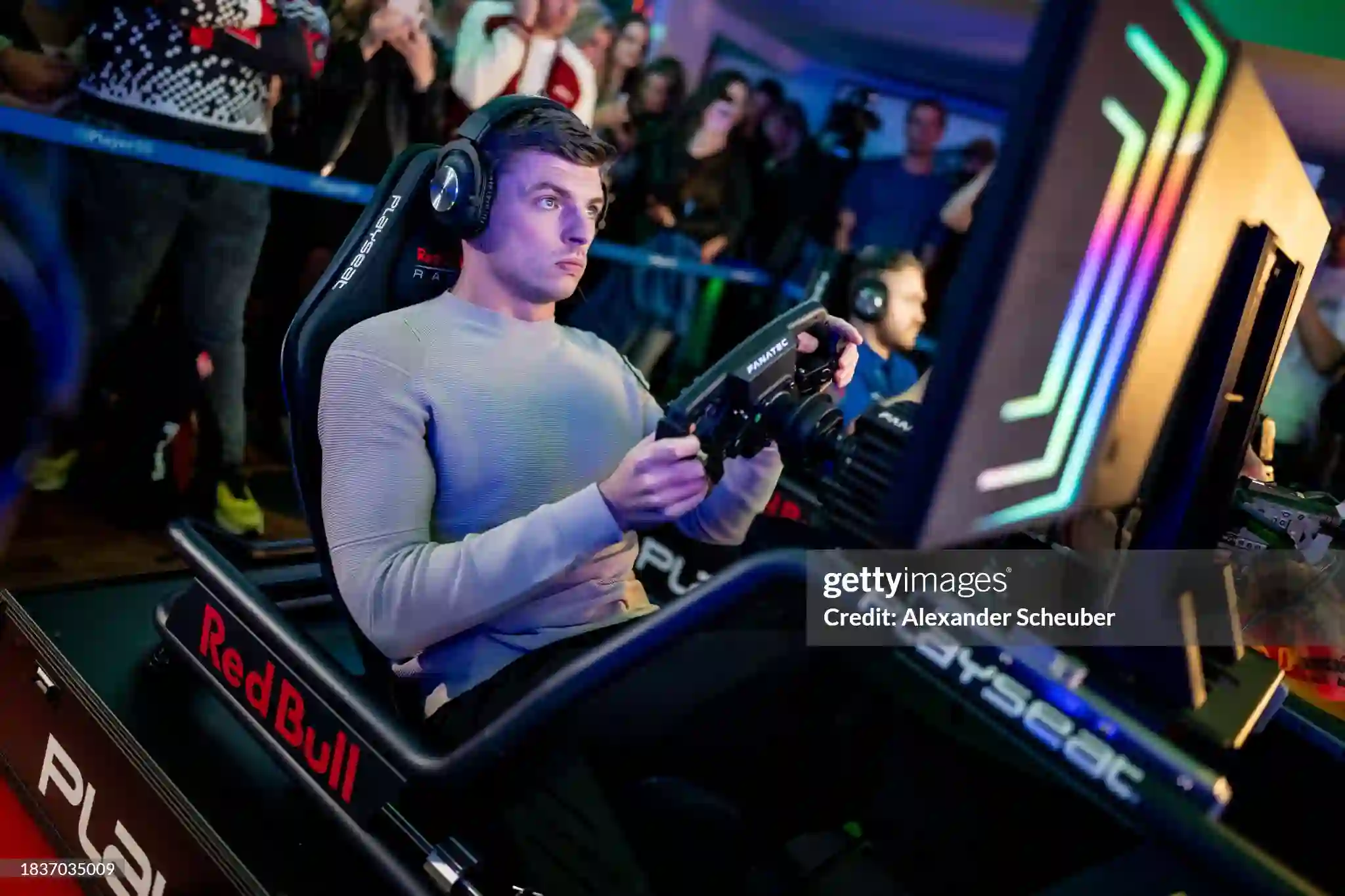
Sim racing in Formula 1 has quietly become one of the most powerful tools in modern motorsport. While fans focus on lap times, tyre strategies, and race-day drama, the real groundwork for success increasingly happens in highly sophisticated simulators—long before a car turns a wheel on track.
In an era defined by budget caps, limited testing, and relentless competition, simulation technology is no longer optional. It is essential. This article explores how sim racing has evolved, how sim racing helps F1 drivers, and why virtual laps now play a decisive role in winning real championships.
The Evolution of Sim Racing in Formula 1
In the early days of Formula 1, driver preparation relied heavily on private testing and seat time. Teams could test almost anywhere, anytime. That world no longer exists.
As regulations tightened and costs soared, teams turned to simulation as a way to maintain performance development without breaking the rules. What began as basic software tools has evolved into full-scale driver-in-the-loop simulators—multi-million-dollar systems capable of recreating entire race weekends with astonishing accuracy.
Today, every top team, including Red Bull Racing and Mercedes-AMG Petronas, operates advanced simulator facilities that run almost continuously throughout the season.
What Is an F1 Simulator and How Does It Work?
An F1 simulator is far more than a gaming rig. At its core, it is a fusion of real car data, advanced physics models, and human feedback.
Key components include:
- A full-scale replica cockpit
- High-resolution visual projection systems
- Motion platforms (in some cases)
- Real steering wheels, pedals, and controls
- Live telemetry integration with the team’s engineering systems
The simulator uses data from wind tunnels, CFD models, and previous race sessions to recreate how the car behaves under specific conditions—fuel loads, tyre degradation, weather changes, and track evolution.
For drivers, the experience is immersive enough that muscle memory, braking points, and steering inputs closely mirror real-life driving.
How Sim Racing Helps F1 Drivers Improve Performance
Understanding how sim racing helps F1 drivers starts with one key fact: modern drivers spend hundreds of hours per season in simulators.
Track Familiarisation and Precision
Before arriving at a circuit, drivers complete extensive simulator sessions to learn:
- Racing lines
- Kerb behaviour
- Braking references
- DRS zones and overtaking opportunities
This is especially critical for new or recently added circuits, where limited practice time puts pressure on immediate performance.
Setup Development
Simulators allow drivers to test countless setup variations without risking damage or consuming physical resources. Engineers and drivers work together to fine-tune:
- Suspension geometry
- Brake balance
- Differential settings
- Aero balance
By the time a car hits the track, teams already know which setup windows are likely to work.
Race Strategy and Decision-Making
Sim racing is also used to simulate race scenarios:
- Safety cars
- Virtual safety cars
- Weather changes
- Alternative tyre strategies
Drivers rehearse decision-making under pressure, which improves confidence and reaction time during real races.
The Role of Sim Racing Under the Budget Cap Era
The introduction of the cost cap fundamentally reshaped Formula 1 operations. Track testing is heavily restricted, making simulation one of the few areas where teams can still extract performance legally.
Virtual development allows teams to:
- Reduce manufacturing costs
- Avoid crash damage
- Maximise learning efficiency
In many cases, a setup change validated in the simulator can save hundreds of thousands of dollars in real-world development.
This shift has made simulator accuracy a competitive differentiator. A better simulator often means a faster car—without ever leaving the factory.
Sim Racing and Driver Development Pathways
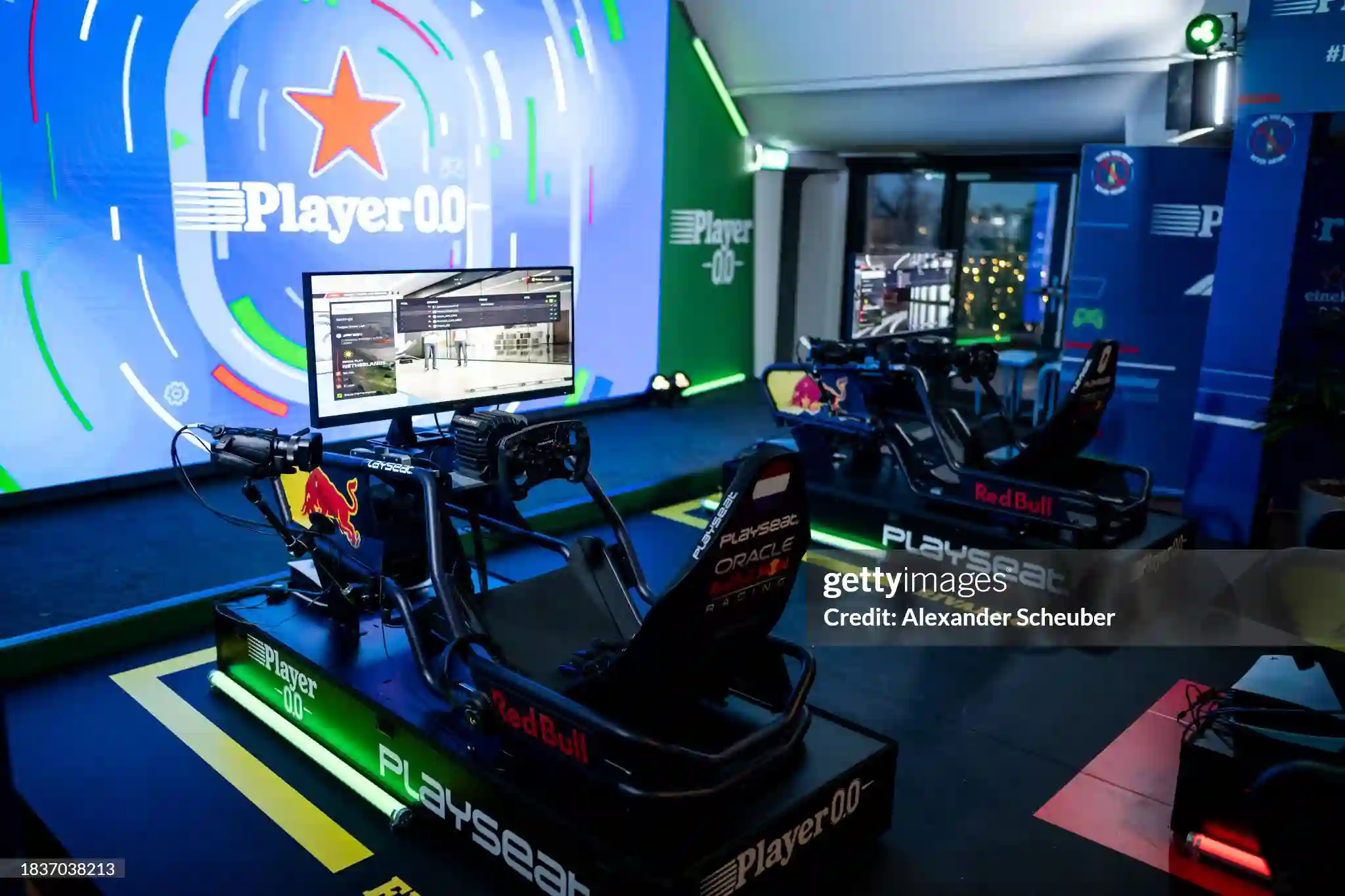
Sim racing has also changed how drivers reach Formula 1.
Younger drivers now arrive with thousands of virtual racing hours before ever driving an F1 car. This background improves:
- Spatial awareness
- Racecraft
- Consistency under pressure
Drivers like Max Verstappen are well known for blending real-world racing with competitive sim racing, reinforcing skills year-round.
For teams, simulators are also vital evaluation tools. Reserve and junior drivers spend significant time in them, contributing development feedback while preparing to step into race seats if needed.
Accuracy vs Reality: Are Simulators Perfect?
Despite their sophistication, simulators are not flawless.
Certain elements remain difficult to replicate:
- True G-forces
- Physical fatigue
- Heat and vibration
- Emotional race pressure
That is why teams combine simulation with limited on-track data to validate models continuously. Drivers play a crucial role here, translating subjective feedback into engineering improvements.
As simulator fidelity improves, the gap between virtual and real continues to narrow—but human interpretation remains essential.
Esports, Sim Racing, and the Blurring Line
The rise of professional esports has further accelerated simulator development. Many technologies used in F1 simulation trickle down into elite sim racing platforms, while esports drivers push the boundaries of realism and competition.
This crossover has:
- Expanded fan engagement
- Created new talent pipelines
- Reinforced the legitimacy of sim racing as a serious discipline
In Formula 1, this synergy strengthens both performance and brand reach.
The Future of Sim Racing in Formula 1
Looking ahead, simulation will only grow in importance.
Emerging developments include:
- AI-assisted race strategy simulations
- Enhanced tyre modelling
- More realistic weather systems
- Increased reliance on virtual car development for new regulations
As Formula 1 moves toward new technical eras, teams that master simulation technology early will hold a decisive advantage.
Conclusion: Virtual Laps, Real Championships
Sim racing has transformed Formula 1 from the inside out. It influences how cars are designed, how drivers prepare, and how races are won.
While fans may never see these virtual laps, they are woven into every on-track performance. From learning circuits to refining race strategy, simulation has become the silent backbone of modern success.
In today’s ultra-competitive environment, the difference between winning and losing often begins not on the grid—but in the simulator.
